
Blog
How to Remove Carpet and Install Wood Stairs in Marietta, GA
Carpeted stairs wear out fast. They trap dust, hold odors, and hide what is under them. Many Marietta homes have solid wood waiting under that carpet, or a framed staircase that can take new wood treads and risers.
This guide shows how the job works from start to finish, so you know what to expect before you hire anyone. If you want a pro to handle it, see our stair remodeling service.
How to remove carpet and install wood stairs in Marietta, GA: the big picture
The work has five stages. Each one affects how the next one turns out, so skipping a step shows up later as squeaks, gaps, or loose treads.
- Stage 1: Remove the carpet, pad, tack strips, and staples.
- Stage 2: Inspect the treads, risers, and stringers for damage.
- Stage 3: Repair the frame and fix squeaks.
- Stage 4: Install new wood treads and risers, or restore what is there.
- Stage 5: Sand, stain, and seal for a durable finish.
Google search data shows how many Georgia homeowners think about this. Searches for “stair remodeling” in Georgia peak in July at about 260 a month and drop to about 90 in August (Google Keyword Planner, last 12 months). Many people plan early, then book later in the year.
Is there wood under your carpet?
Peel back one corner of carpet at the top step and look. You may find one of three things.
- Solid hardwood treads: Often can be sanded and refinished.
- Softwood or plywood treads: Built to be covered, so they usually need to be replaced with finish-grade wood.
- Damaged or uneven wood: Needs repair or replacement before any finish goes on.
If you find real hardwood, refinishing can save time. Our post on refinishing engineered hardwood floors explains how sanding limits work on thinner wood.
Step 1: Removing the carpet safely
Carpet removal is messy but simple. The risk is in the hidden hardware under it.
What you will pull out
- The carpet itself, cut into strips so it is easy to carry.
- The pad underneath, which is often stapled to every step.
- Tack strips along the back and bottom of each tread.
- Hundreds of staples, which must all come out.
Tack strips have sharp nails that point up. Wear thick gloves and sturdy shoes. Use a pry bar and pliers, and work step by step from the top down. Vacuum each step as you go so you can see the wood clearly.
Why leftover staples ruin the finish
A single staple left in a tread will show through stain and can tear sandpaper. Pros run a magnet and a flashlight across each step to catch what the eye misses.
Step 2: Inspect and repair the stair frame
Once the wood is bare, you can see how healthy the staircase really is. This is the step that decides whether the new stairs stay quiet and tight.
Signs you need repairs
- Loose or bouncy treads that move when you step on them.
- Cracks, splits, or soft spots from old water damage.
- Gaps between the tread and the riser.
- Treads that are uneven from one step to the next.
Code and safety checks
The International Residential Code, published by the International Code Council, sets the basics most homes follow: riser height of 7¾ inches at most, tread depth of at least 10 inches, and handrail height between 34 and 38 inches. Local rules in Cobb County may add details, so a good installer checks them before the work starts.
Step 3: Choose how to install the wood
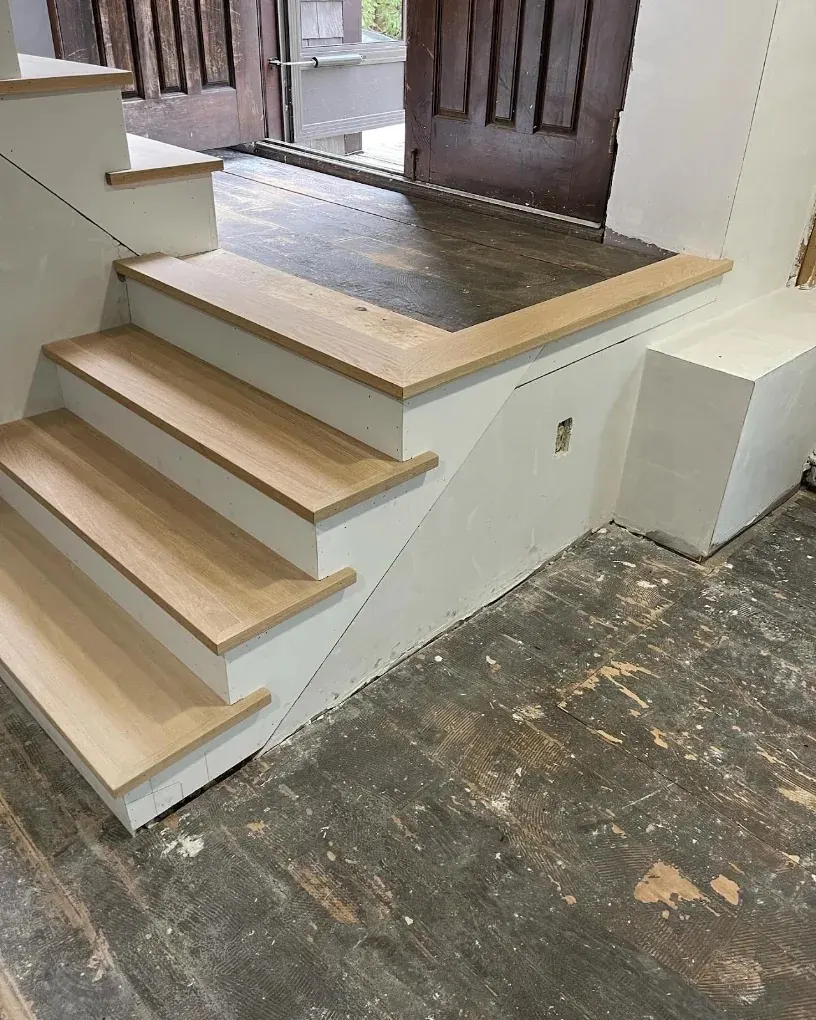
There is more than one way to put wood on stairs. The right choice depends on what you found under the carpet and the look you want.
Option A: Refinish the existing wood
If the treads are solid hardwood in good shape, sanding and restaining can bring them back. This keeps the original stair structure and often costs you less time on site. Our team also handles hardwood floor restoration and refinishing so the stairs can match the rooms around them.
Option B: Install new treads and risers
When the old wood is soft, damaged, or poor quality, new treads and risers are the better path. Installers cut each piece to fit, glue it, and fasten it so it holds tight. The riser can be painted white for a clean contrast, or stained to match the tread.
Option C: Cap the existing treads
Stair caps are thin wood pieces that fit over existing treads. They are faster to install, but the fit must be exact. A cap that is not glued and nailed well can lift or click over time.
Picking a wood species
- Oak: Hard, widely available, and takes stain well.
- Maple: Smooth, tight grain with a modern look.
- Hickory: Very hard and bold, good for busy households.
Stairs take more wear than any other part of a floor, so choose a hard species and a tough sealer. Our guide to professional hardwood floor installation explains how wood choices affect the rest of the house.
Step 4: Finishing and care
The finish is what protects the wood from shoes, pets, and daily traffic. Take your time here.
Sanding, stain, and sealer
The wood is sanded smooth, wiped clean, then stained if you want a color change. Several coats of sealer follow. Each coat needs time to dry, which is why stairs are often blocked off for a short time after finishing.
Add grip where it matters
Bare wood can be slick, especially in socks. Ask your installer about a satin finish, which is less slippery than high gloss. A narrow runner is another option if you want extra traction.
Keep the wood stable
Wood moves with moisture. The National Wood Flooring Association recommends keeping indoor relative humidity between 30 and 50 percent. In Georgia summers, a dehumidifier or steady air conditioning helps prevent gaps and cupping.
Upgrading the railing at the same time
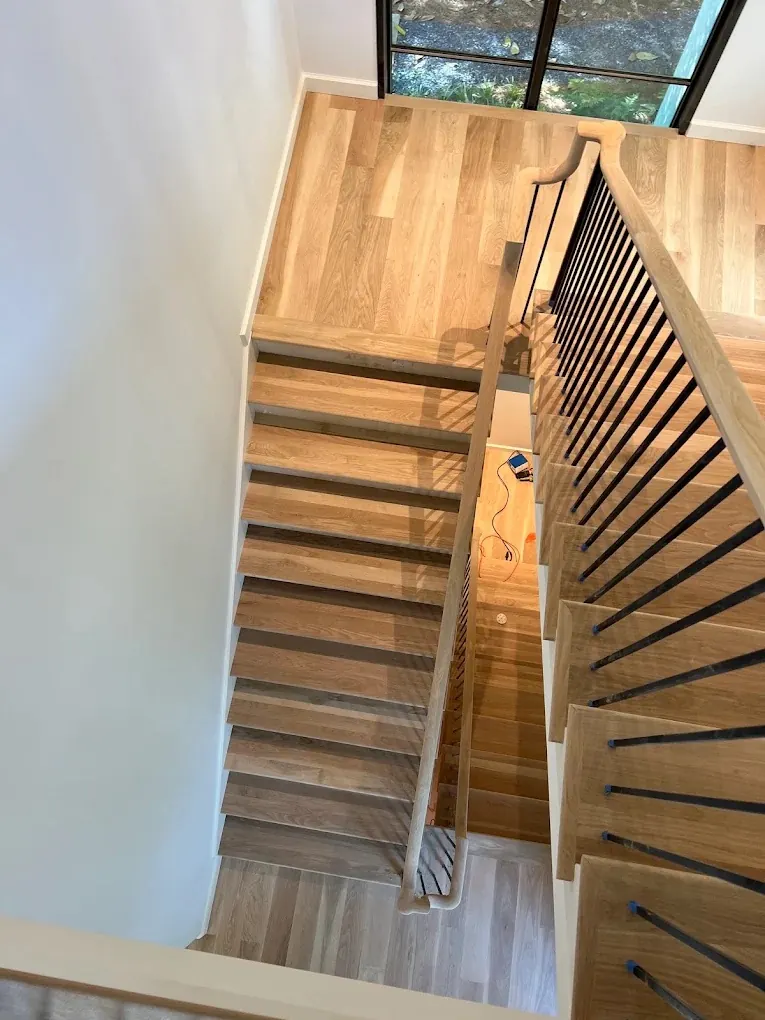
Many homeowners search for “stair railing remodel” while planning new treads. It makes sense to do both together. New wood steps next to an old, wobbly railing look unfinished, and a loose handrail is a safety risk.
- Check that the handrail does not move when you pull on it.
- Match the balusters and newel posts to the new wood tone.
- Plan the railing before the finish coats so everything is sealed together.
For ideas on style, see these modern stair remodeling ideas and this local homeowner’s guide to stair remodeling.
DIY or hire a pro?
Pulling carpet is a fair weekend project. Fitting new treads and risers is different. Every step must be level, tight, and the same height as the next, because even a small difference can cause a trip.
- DIY works for: carpet and pad removal, staple cleanup, and basic cleaning.
- Hire a pro for: tread and riser fitting, frame repairs, finishing, and railing work.
We are a licensed and insured team, and we come to you for a free in-home estimate. See our past work in the project portfolio or learn about flooring and stair services in Marietta.
FAQ
Common questions from homeowners who want to replace carpeted stairs with wood.
How do I remove carpet from my stairs and install wood?
Start by cutting and pulling the carpet, pad, tack strips, and every staple. Then inspect and repair the stair frame, fit new wood treads and risers (or refinish the wood already there), and finish with stain and sealer. A pro can do it with the right tools, so you get tight, quiet steps.
How much does it cost to remove carpet and install wood on stairs?
The total depends on the number of steps, the wood species, the condition of the frame, and whether you add a new railing. Because every staircase is different, request a free estimate and we will quote your exact project.
How do I remove carpet and install hardwood on stairs?
After the carpet is out and the frame is solid, new hardwood treads and risers are cut to fit, glued, and fastened. The exposed edge, called the nosing, is shaped for a safe, even step. The wood is then sanded, stained, and sealed.
How long does it take to replace carpeted stairs with wood?
Most staircases take a few days, including drying time for the finish. Repairs, a new railing, or a long staircase can add time. We confirm the schedule during your free estimate.
Can I save the wood that is under my carpet?
Often yes, if the treads are solid hardwood without deep damage. Sanding and refinishing can make them look new. If the wood is soft, split, or low grade, new treads and risers are the better choice.
Are you licensed and insured?
Yes, LC&A Floor is licensed and insured. We are happy to answer questions about our work during your free in-home estimate.
Related Posts
- Stair Remodeling: A Local Homeowner’s Guide
- Modern Stair Remodeling Ideas for Your Home
- Hardwood Floor Installation: What to Know Before You Hire
- Revitalize Your Home with Hardwood Floor Refinishing
Ready to remove carpet and install wood stairs in Marietta, GA?
If you want to remove carpet and install wood stairs in Marietta, GA, our team can walk you through the options at your home. Request a free estimate and we will give you a clear plan for your staircase.
Prefer to call? +1 (833) 709-6130