
Blog
Understanding the Rule of 3 for Flooring Installation in Roswell, GA
The rule of 3 for flooring installation is a simple checklist: get the subfloor, the wood, and the layout right before the first board goes down. It is not a building code. It is a practical way to remember the three things that decide whether a hardwood floor stays flat and tight for decades.
In Roswell, those three checks matter even more. Georgia summers are humid, winters can be dry indoors, and homes here range from older houses on crawl spaces to newer builds on slabs. Below, we break down each part so you know what a careful hardwood floor installation should look like.
The rule of 3 for flooring installation in Roswell, GA: what it really means
If you searched this phrase and found mixed answers, you are not alone. There is no single official “rule of 3” in the flooring trade. People use the phrase in a few ways, so it helps to be clear about which one we mean.
The installer’s version: three checks before install day
This is the version we use on the job. Before any wood is nailed or glued, we confirm three things:
- The base: the subfloor is flat, clean, dry, and firmly fastened.
- The wood: the boards have been acclimated and their moisture matches the home.
- The plan: the layout direction, expansion gaps, transitions, and finish are decided in advance.
The designer’s version: three tones in a room
Some designers use “rule of 3” for color. Keep the floor, the walls and cabinets, and one accent tone in balance, so the room feels calm instead of busy. This is a style guide, not a technical rule. It helps when you pick a stain or a wood species, but it will not keep a floor from cupping.
Why the installer’s version matters most
Most flooring failures are not caused by the wood itself. They come from moisture, an uneven base, or no room for the floor to move. All three are covered by the checklist. That is why this post focuses on it.
Check 1: The subfloor must be flat, dry, and solid
A hardwood floor is only as good as what is under it. A strong, level base keeps boards from rocking, squeaking, or opening up over time.
Flat
Low spots let boards flex. High spots make boards lift at the edges. Installers check the surface with a long straightedge and fix dips by leveling or high spots by sanding or grinding. Doing this first saves you from squeaks later.
Dry
Moisture is the number one enemy of wood floors. In Roswell, crawl spaces can hold damp air in summer, and slab floors can pass moisture up from the ground. A moisture test of the subfloor comes before any wood is opened. If the base is too wet, the job waits until the cause is fixed.
- Crawl space homes: check for standing water, bare soil without a vapor barrier, and poor venting.
- Slab homes: test the concrete and use the right moisture barrier for the install method.
- Plywood or board subfloors: test the wood moisture, not just the air.
Solid
Loose or squeaky subfloor panels get screwed down before flooring goes on. Old glue, paint, and debris get cleaned off. It is not exciting work, but it is the part that decides how the floor feels under your feet for years.
Check 2: Acclimate the wood and match its moisture to your home
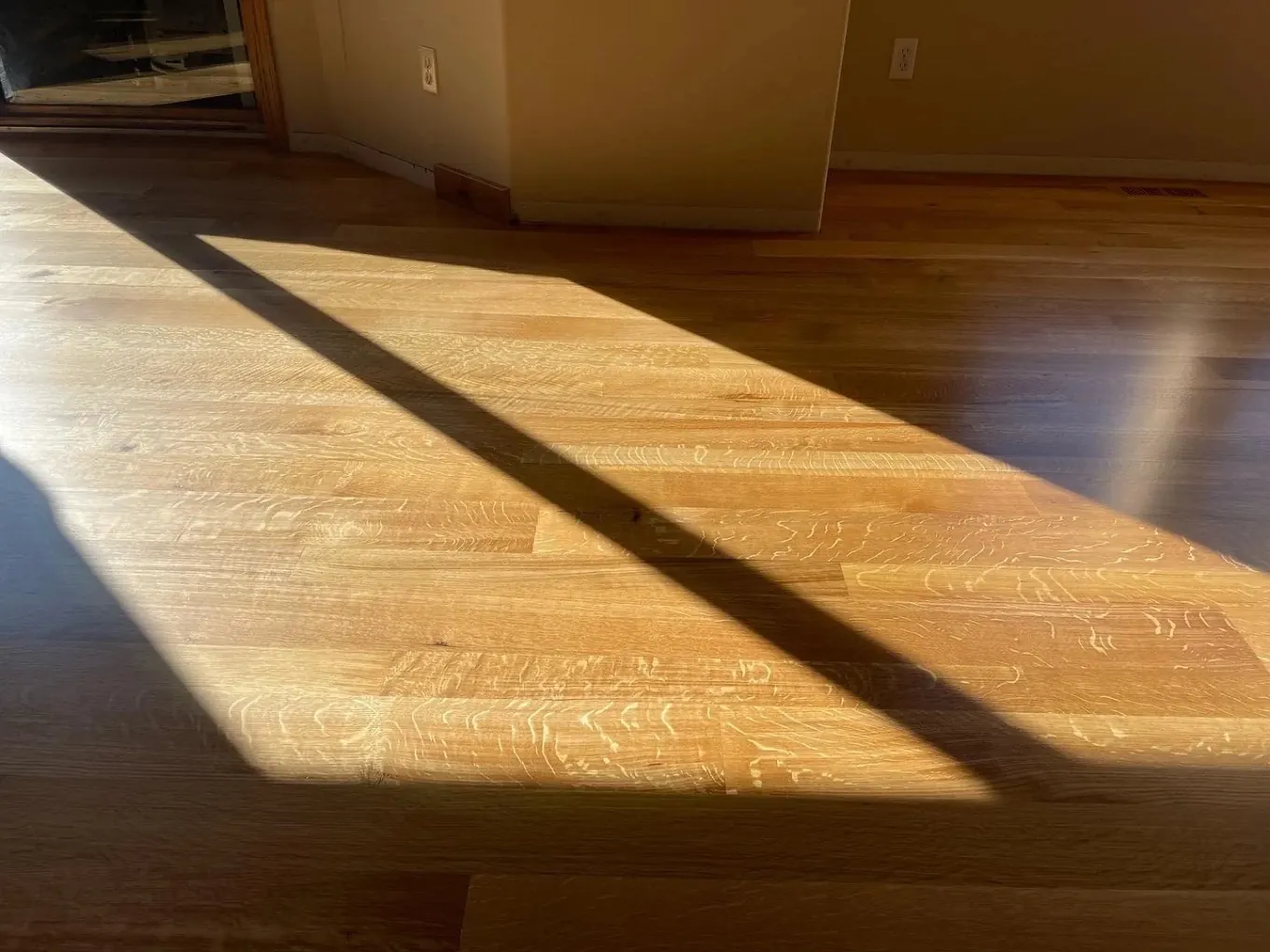
Wood takes on and gives off moisture with the air around it. When boards swell, they push on each other. When they shrink, gaps open. Acclimation lets the wood settle to your home’s normal conditions before it is locked into place.
What acclimation looks like
The boards are delivered to the home and stored flat, in the rooms where they will be installed. The heating and cooling system should be running the way you normally live, so the air matches real life. Installers then read the moisture of the wood and the subfloor with a meter. The goal is for the two numbers to be close, not just for a certain number of days to pass.
The National Wood Flooring Association (NWFA) publishes installation guidelines and recommends keeping indoor relative humidity in roughly the 30% to 50% range for wood floors. That is a useful target for Georgia homeowners, since summer humidity here often runs higher.
Why Roswell homes need extra care
- Humid summers: wood swells, and tight floors can cup or buckle if there is no room to move.
- Dry winter heat: wood shrinks, and gaps can show between boards.
- New construction: framing and drywall are still drying, so the house may hold extra moisture early on.
Picking the right type of wood
Solid hardwood is beautiful and can be sanded and refinished many times, but it reacts more to humidity swings. Engineered hardwood has a layered core that is more stable, which can suit slab homes and wide boards. Both can be a great choice. The right pick depends on the room, the subfloor, and how you live. During a free in-home estimate, we look at your space and explain which option fits.
Check 3: Plan the layout, expansion gaps, and finish
The third check is the plan. Good planning is what makes a floor look calm and clean once it is done.
Layout and direction
Boards usually run in the direction of the longest wall or toward the main light source, and across the floor joists when possible. We dry-lay the first rows, check that walls are straight, and balance the width of the last row so you do not end up with a thin sliver along one wall.
Expansion gaps
Hardwood needs room to move. A common practice is to leave about three-quarters of an inch at walls and fixed objects, which is later covered by baseboards or trim. This is one of the most important details, and the one most often skipped by rushed installers. In a humid place like Roswell, it is what keeps a floor from pushing up in summer.
Transitions, stairs, and trim
Plan how the new floor meets tile, carpet, or another wood floor. If stairs are part of your project, matching the treads and risers to the new floor gives the whole home a finished look. See our stair remodeling service for options that pair with new hardwood.
Finish choice and cure time
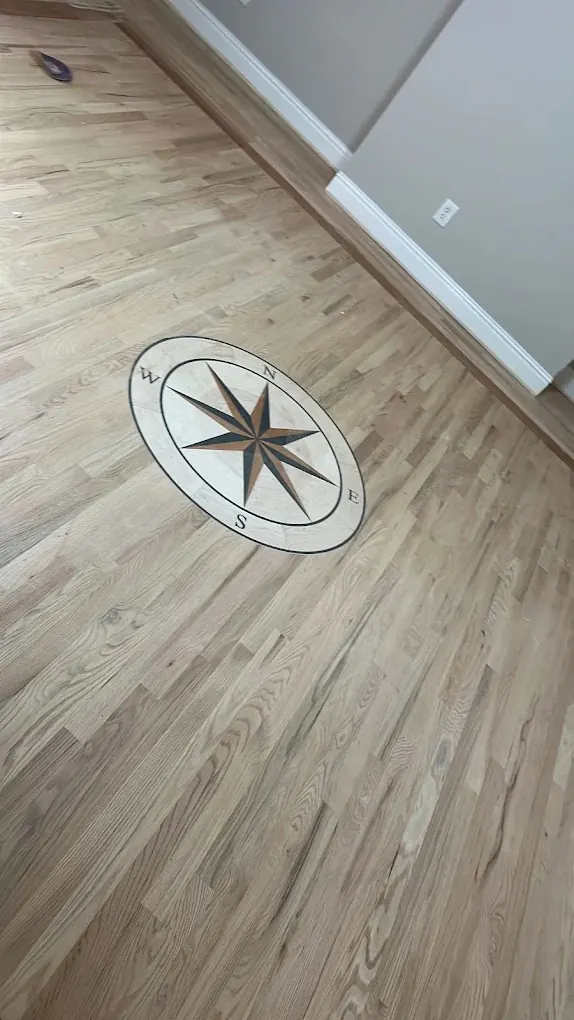
Floors can come prefinished from the factory or be sanded and finished on site. Prefinished floors are ready to use sooner. Site-finished floors give a smooth, seamless surface and more control over color. Finishes need time to cure, so plan to keep furniture and heavy traffic off for the time your installer gives you.
How long does a hardwood installation take, and when should you book?
Timing depends on the size of the space, the type of wood, and whether the floor is finished on site. As a general guide, a room or two can often be installed in a day or two, and a larger area takes several days. Sanding and finishing add more time, plus cure time before heavy use. Your installer should give you a clear schedule at the estimate.
Seasonal demand in Georgia
According to Google search data (Google Keyword Planner, last 12 months), searches for “hardwood floor refinishing near me” in Georgia peak in April at about 1,900 a month and drop to about 590 a month in July. Spring is when many homeowners start floor projects, so calendars fill up. If you want a spring start, reaching out early gives you more scheduling choices. For context, “flooring installation” alone draws roughly 480 searches a month across Georgia.
Installing new floors vs. refinishing what you have
Not every project needs a full replacement. If your existing solid hardwood is structurally sound, sanding and refinishing can bring it back, and restaining lets you change the color. Resurfacing a hardwood floor means sanding off the worn top layer and applying fresh finish. Learn more about professional hardwood floor refinishing and restoration to see if that fits your home better.
Talking about cost without guessing
Many homeowners ask about hardwood installation cost first. The honest answer is that it depends on the wood species, board width, square footage, subfloor repairs, and finish. Instead of guessing, we recommend a free in-home estimate so the quote matches your actual floors. You can also read our post on what affects hardwood floor installation cost to learn the factors involved.
How to use the rule of 3 when you hire an installer
Turn the three checks into three questions. A good contractor will answer them without hesitation.
- “How will you test and prepare my subfloor?” Look for moisture testing, leveling, and fastening, not just “we’ll lay it down.”
- “How will you acclimate the wood?” Look for moisture meter readings, not only a number of days.
- “What is your plan for layout, gaps, and finish?” Look for a clear answer on direction, expansion space, transitions, and cure time.
Also ask to see past work. You can browse our hardwood flooring portfolio for real projects. We are a licensed and insured team, and we come to you for on-site estimates across the area, including our Roswell service area.
FAQ
Common questions from homeowners in Roswell and nearby Georgia cities about hardwood floor installation.
What is the rule of 3 for flooring installation in Roswell, GA?
It is a three-part checklist: make sure the subfloor is flat, dry, and solid; acclimate the wood and match its moisture to your home; and plan the layout, expansion gaps, and finish before work begins. It is a practical guideline, not a building code, and it matters in Roswell because of Georgia’s humidity.
How much does hardwood floor installation cost?
Cost depends on the wood species, board width, size of the area, subfloor condition, and whether the floor is finished on site. The most accurate way to learn your cost is to request a free in-home estimate from us, so the quote fits your actual project.
How long does it take to install hardwood floors?
A small room can often be done in a day or two, while a larger area takes several days. Sanding and finishing on site add time, and the finish needs time to cure before heavy use.
How long does it take to install 1000 sq ft of hardwood floor?
A space of about 1000 square feet typically takes several days for installation alone. Site finishing, repairs to the subfloor, or complex layouts can add more time, so ask for a written schedule at your estimate.
Can hardwood floors be restained or resurfaced instead of replaced?
Often yes. If your solid hardwood is in good structural shape, it can be sanded and restained or refinished to look new. Engineered floors depend on how thick the top wear layer is, so an on-site check is the best way to know.
Are you licensed and insured?
Yes. LC&A Floor is a licensed and insured flooring company. Call us or request a free estimate and we will gladly answer any questions about our credentials before work begins.
Related Posts
- Your Guide to Hardwood Floor Installation: What to Know Before You Hire
- Revitalize Your Home: Hardwood Floor Refinishing
- Refinishing Engineered Hardwood Floors: Is It Possible?
- Stair Remodeling in Roswell: A Local Homeowner’s Guide
- Request a free flooring estimate
Ready to put the rule of 3 to work in your home?
If you are planning new floors, the rule of 3 for flooring installation in Roswell, GA is your best guide: a solid subfloor, properly acclimated wood, and a clear plan. We come to you for a free in-home estimate and explain each step before work starts.
Prefer to call? +1 (833) 709-6130